
Waterproofing Concrete Planter Boxes
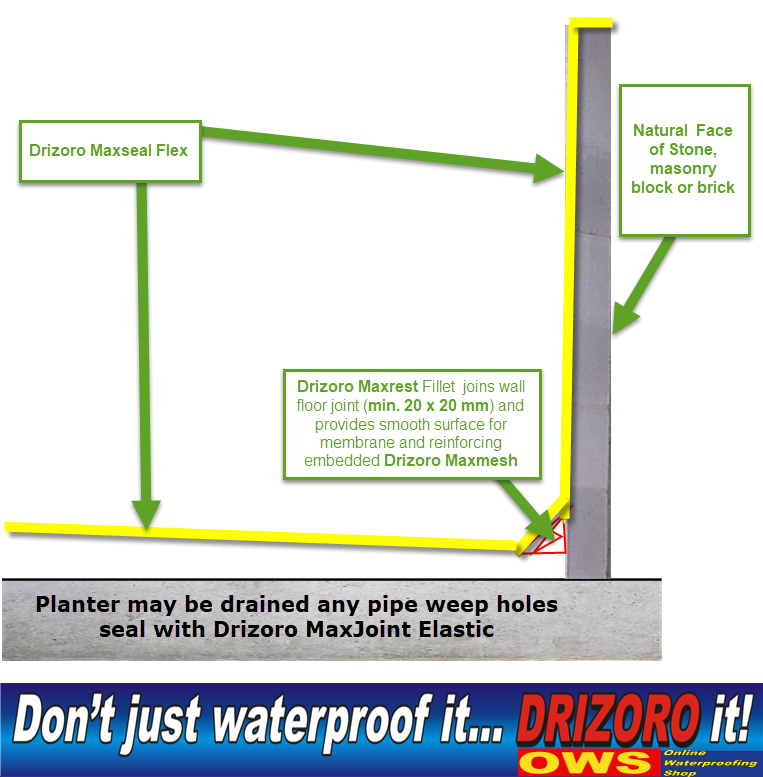
Waterproofing Concrete Planter Boxes is essential. The presence of concrete planter boxes can spruce up almost any garden or yard and is a great structure to house and contain your plants. How you seal or waterproof concrete planter boxes will help to maximize the service life of the planter box.
Waterproofing your concrete planter box is highly recommended. Ensuring your plants remain healthy. Waterproofing avoids the leaching of highly alkaline salts into the soil in the planter. The alkalinity of the soil may stunt the growth of some plants. Also, some masonry blocks and bricks are very porous and the soil may dry out too quickly. Not only that! Those planter boxes not waterproofed will need renovation much sooner.
How waterproofing concrete planter boxes, masonry blocks, or brick planter boxes
Step 1
Vigorously clean your concrete plant planter box. Scrabble floor wall join in readiness for fillet/cove of Drizoro Maxrest. This small cove protects the integrity of the membrane. And also joins the floor to the wall of the planter. Especially when it is a highly troweled slab. Remove any efflorescence with Efflorescence Rid.
Step 2
Dampen the area. Install Drizoro Maxrest fillet or coving to join floor wall joint. (minimum fillet 20 x 20 mm which will consume approximately 1 Kg of Maxrest per Lineal metre). Remove any loose material from the planter box.
When making the cove , make it more rounded for best results
Step 3
Install drainage points. Those required to remove excess water from the masonry planter box. Seal around the pipe using Drizoro Maxjoint Elastic
Step 4
Dampen the surface and apply a coating of Drizoro Maxseal Flex from top to bottom. Allow curing overnight. Dampen again before applying the second coat.
Step 5
Allow the coating to cure for 10 – 14 days. Then place the protection Board. Fill with appropriate fill/potting mix and plant install your plants.
Here you will find some Raised Garden Bed designs.

Planter Boxes should be planned. But often unplanned. An owner or designer decides it will good. Just put there against the wall
Planter Boxes Attached to sidewall
Waterproof Planter boxes, like pictured above. Include Waterproofing in the building design plan. Planter boxes are often added as an afterthought creating some headaches for the waterproofing contractor. One builder I worked with at one time had in fact rendered the external walls. Then someone decided that would look more upmarket if a fountain was put on the wall. So they just bricked up to the wall, rendered it, and partially installed the plumbing. Then asked the waterproofer to make it waterproof.
No problem right?
4 Problems created for building and the waterproofer by adding a planter box or a fountain to your external wall are
- Water penetration through the exterior wall into the internal space
- Making the join between the planter box and the exterior wall watertight
- Will the bricks or masonry planter/fountain stay attached to the rendered wall?
- If it is placed on an exterior slab (not part of the original construction). What will movement between the house slab and planter slab cause movement and cracking?
At the time I completed 30 + planters and only had 2 issues –
a. fountain plumber installer damaged the waterproofing – minor issue easily fixed
b. There was no room for expansion between the house slab and the concrete floor of the planter/pond. All that was jammed between the footing of a lightweight concrete fence. This caused the bottom of the fountain/pond to crack severely. A major issue, needs redesigning the fountain. Installation of a proper expansion joint.
Conclusion
Luckily Drizoro products were, in this instance, very effective even when the design was an afterthought. Only one out of 30 needed some redesigning before the completion of waterproofing was even possible.
Waterproofing concrete planter boxes is necessary to prevent water from damaging the retaining structure


